In some cases, open-heart surgery is not the only option for treating children with congenital heart disease. Many congenital heart defects can be safely and effectively treated in Le Bonheur’s cardiac catheterization laboratory (cath lab) without surgery, often using minimal sedation and achieving outcomes similar to open-heart procedures.
In the cardiac cath lab, pediatric interventional cardiologists guide a small, flexible tube called a catheter through blood vessels into the heart. These catheters can be used both to diagnose and to treat congenital heart defects. For diagnostic procedures, contrast dye is injected through the catheter to clearly visualize the heart’s structures and blood flow, allowing physicians to capture detailed images that guide treatment planning.
Catheter-based procedures can also be used to improve blood flow, repair holes in the heart or place devices such as stents. Because interventional cardiology procedures are minimally invasive, children typically experience significantly shorter recovery times compared with open-heart surgery. Our electrophysiologists also use the cath lab to diagnose and treat heart rhythm disorders, known as arrhythmias.
Hybrid Catheterization Lab
The Heart Institute at Le Bonheur is proud to offer the only hybrid cardiac catheterization labs in the region for interventional cardiology procedures. These advanced rooms function as both catheterization labs and fully equipped operating rooms. If a child requires surgery during a catheter-based procedure, Le Bonheur pediatric cardiothoracic surgeons can immediately operate in a sterile surgical environment without moving the patient.
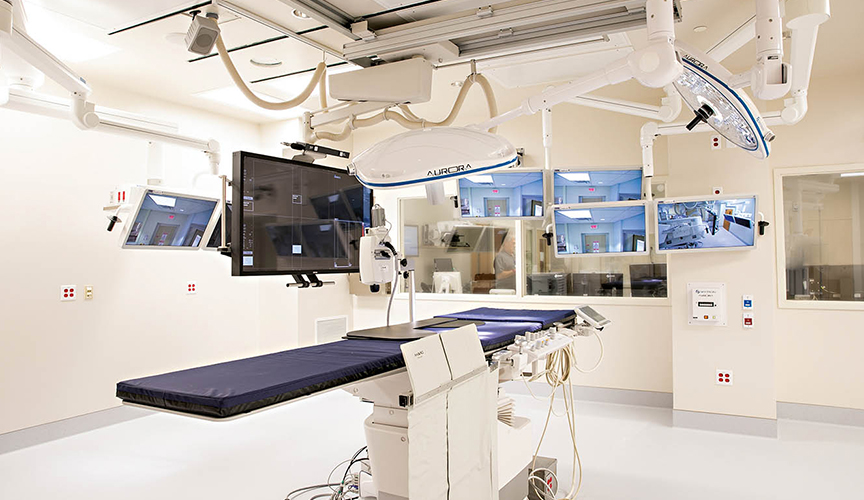
Our electrophysiologists, cardiologists who study the electrical system of the heart, conduct studies in the catheterization (cath) lab to help diagnose any abnormalities in the heart's rhythm (also known as arrhythmia). They have the ability to transition from diagnostic to interventional or curative studies inside the cath lab.
Hybrid MRI and Cardiac Catheterization Suite
The Heart Institute at Le Bonheur also houses a hybrid magnetic resonance imaging (MRI) machine and cardiac catheterization suite, one of only a few centers in the country with this capability and the first in Tennessee and the surrounding region. This innovative hybrid setup offers several important benefits for patients:
- Reduced exposure to anesthesia due to seamless movement between the cath lab and MRI
- Reduced exposure to ionizing radiation by allowing interventional cardiac catheterization to be performed under MRI guidance (iCMR)
- State-of-the-art MRI technology that accommodates patients of all sizes, produces higher-quality images and shortens scan times
- Enhanced visualization of the heart during catheter-based procedures, improving precision and safety
- Detailed three-dimensional and axial imaging that supports advanced planning, including 3D and virtual reality modeling for complex interventions
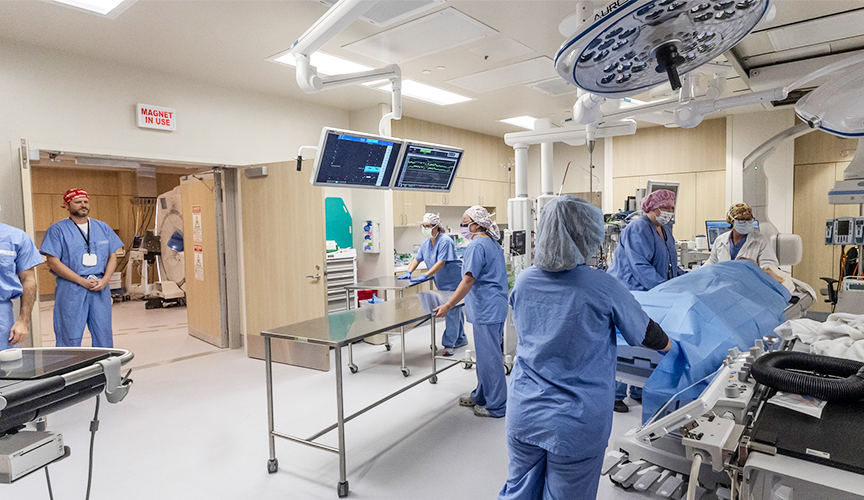
Le Bonheur physicians are actively partnering with industry leaders to develop new catheter-based procedures, devices and protocols designed specifically for use within the MRI environment, helping lead the future of interventional cardiology.
This suite also serves as a dedicated cardiac MRI space for Heart Institute patients, eliminating the need to transport children to other areas of the hospital for advanced heart imaging, further enhancing safety and efficiency.
Treatments and Devices
The cath labs in Le Bonheur’s Heart Institute are used for a wide range of interventional cardiology treatments and to place wide variety of devices including:
- Transcatheter device closure of patent ductus arteriosus (PDA), a small hole in the heart, including in the most premature infants
- Transcatheter device closure of atrial septal defects (ASD)
- Transcatheter device closure of muscular ventricular septal defects (VSD)
- Treatment of vessel narrowing (“stenosis”) with balloons and/or stents, including pulmonary artery stenosis, pulmonary vein stenosis and coarctation of the aorta
- Balloon angioplasty of pulmonary valve stenosis or aortic valve stenosis
- Transcatheter pulmonary valve replacement using the latest available pulmonary valve technology
- Pulmonary flow reducer placement
- Percutaneous hybrid stage 1 palliation for single ventricle patients
- Catheter-directed thrombectomy for various conditions including pulmonary embolism
- Emergent treatment of infants born with critical congenital heart disease
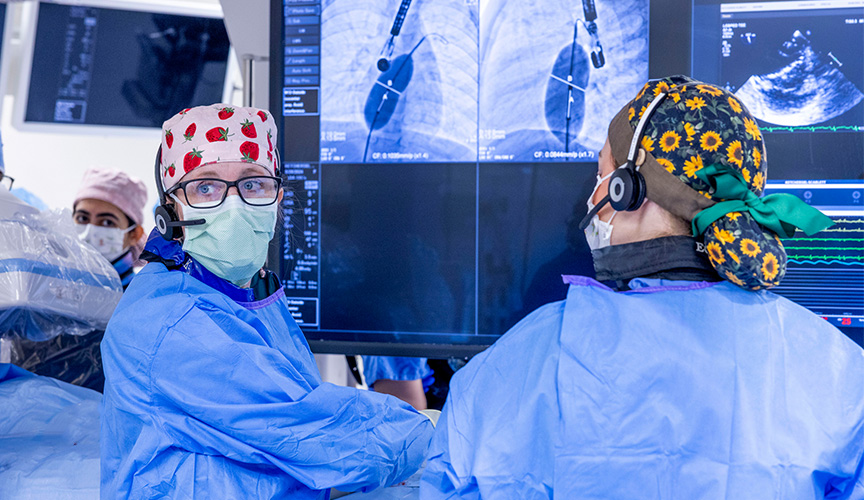
Le Bonheur Heart Institute Virtual Reality Program
Le Bonheur is one of only a few pediatric centers in the world using virtual reality (VR) technology to plan complex heart surgeries and cardiac catheterization procedures. This advanced level of preparation allows our teams to deliver safer, more precise and more efficient care for children with congenital heart disease.
Using your child’s CT scan, MRI or 3D echocardiogram, cardiologists create a highly detailed, three-dimensional virtual model of the heart. Physicians can then explore the heart in VR, simulate procedures and virtually place devices, allowing them to develop a precise, personalized plan before your child ever enters the cath lab or operating room.
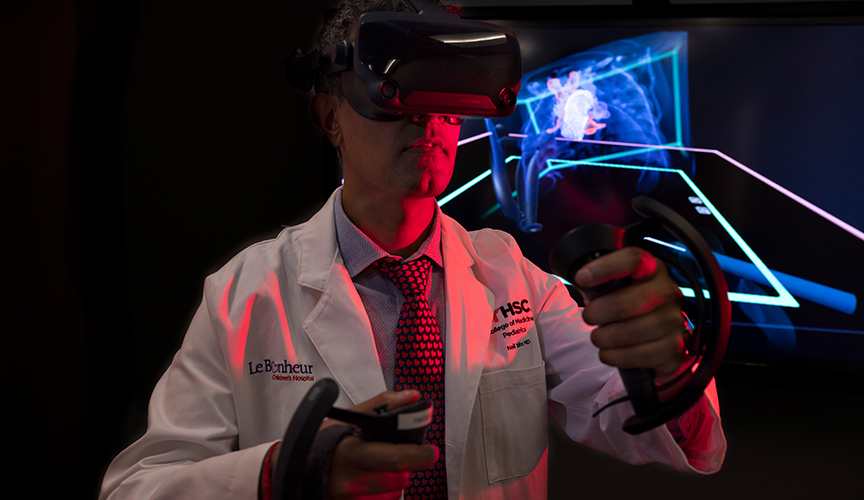
Benefits of Le Bonheur’s Virtual Reality Program for interventional cardiology procedures include:
- Enhanced understanding of each child’s unique heart anatomy through immersive 3D visualization
- More detailed procedural planning, leading to shorter procedure times, reduced radiation exposure and less time under anesthesia
- Improved accuracy in device selection and placement, supported by VR-based procedural reference planning
By combining cutting-edge technology with expert clinical care, Le Bonheur’s Virtual Reality Program helps ensure the safest and most effective outcomes for children and families we serve.
Interventional Cardiology Clinical Trials
Our interventional cardiologists are at the forefront of developing new techniques and pioneering new devices for pediatric cardiology interventions from the smallest babies to adults. Current clinical trials include:
- COMPASSION Heart Valve Trial: This studies a new transcatheter heart valve system for children and adults with a malfunctioning pulmonary valve.
- Edwards Alterra Post Approval Study: This study monitors how a medical device that has been approved by the U.S. Food and Drug Administration (FDA) for heart valves is performing and what kind of results patients have.
- Merit PREEMIE: This studies a new device for premature infants to treat a birth defect of the heart called patent ductus arteriosus (PDA), which happens when a blood vessel near the heart does not close like it should after birth.
Learn more about the clinical trials in Le Bonheur’s Heart Institute.
For more information, contact us at info@lebonheur.org or 1-866-870-5570.