Program Overview
Training and experiences are consistent with the guidelines established by the International Neuropsychological Society (INS), Division 40 of the American Psychological Association (APA), and the Houston and Minnesota Conferences. Within the pediatric track, fellows gain expertise in developmental brain‐behavior relationships and strengthen essential skills working with medically complex children in both inpatient and outpatient settings. This is accomplished through diverse clinical activities, didactics and research involvement in the Le Bonheur Neuroscience Institute. Graduating fellows are well prepared for independent practice in pediatric neuropsychology. They are also ready to pursue ABPP board certification in clinical neuropsychology, as well as subspecialization in pediatric neuropsychology. This fellowship is in the process of applying for membership in the Association of Postdoctoral Programs in Clinical Neuropsychology (APPCN) and adheres to APPCN guidelines, including structured supervision and competency-based training consistent with Houston Conference standards. Supervising neuropsychologists within this track include Sarah Watts, PsyD, Christen Holder, PhD, Nicole Kubinec, PhD, Amanda DeCrow, PhD, and Donald Bearden, PhD, ABPP-CN, FAES.
Learn more about how to apply.
Salary and Benefits
-
The current annual stipend for the fellowship is $68,000
-
As employees of The University of Tennessee Health Science Center (UTHSC), a comprehensive benefits package is provided.
-
Fellows time off includes UTHSC's official holiday schedule (~12 holidays plus winter closings). Fellows also accrue annual leave at 16 hours per month and sick leave at 8 hours per month in accordance with UTHSC staff policy.
-
Other benefits include free lunch in Le Bonheur's Physician Dining Hall, free parking, full access to library resources, administrative support and study materials for the Examination for Professional Practice in Psychology (EPPP).
Training
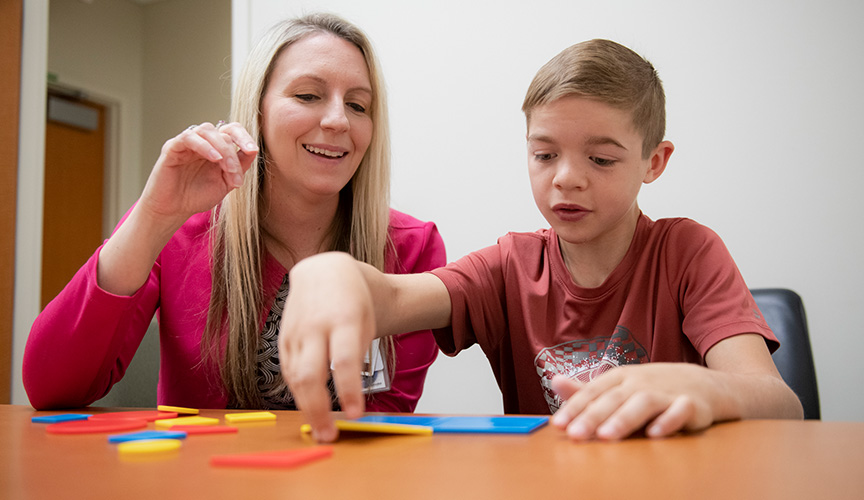
Approximately 70-80% of the fellow’s time is spent in clinical activities, 10-15% in didactics and supervision and 10-20% in research. The program is designed to provide fellows with exposure to a wide range of medical conditions, neurocognitive and neurodevelopmental disorders and comorbid psychiatric issues. A strong emphasis is placed on multidisciplinary collaboration and participation in medical teams. During the two‐year program, fellows gain increased independence in clinical, research and professional activities.
Year One:
- Outpatient Evaluations: The fellow performs two outpatient evaluations per week from the general referral stream.
- Inpatient Epilepsy: The fellow performs one inpatient evaluation per week with participation in the weekly EMU conference.
- Multidisciplinary Clinic (MDC): The fellow can choose between participation in several different multidisciplinary team clinics listed below.
- Didactics
Year Two:
- Outpatient Evaluations: The fellow performs one outpatient evaluation per week from the general referral stream.
- Inpatient Epilepsy: The fellow performs one inpatient evaluation per week with participation in the weekly EMU conference.
- Inpatient Consult Service: The fellow will cover inpatient cardiology, infantile spasms and traumatic brain injury consultations, providing inpatient consultation and testing.
- MDC: The fellow can choose between participation in several different multidisciplinary team clinics listed below.
- Didactics
Outpatient Evaluations:
To be referred for a pediatric neuropsychological evaluation, patients must have a medical condition that impacts the central nervous system. Common medical conditions seen by our service include epilepsy, brain tumor, stroke, traumatic brain injury, cerebral palsy, genetic disorders, cardiac disease and tuberous sclerosis. Outpatient evaluations are performed in a “same‐day” model, with diagnostic intake, testing, supervision and feedback all occurring in the same day‐long appointment.
Inpatient Epilepsy Evaluations:
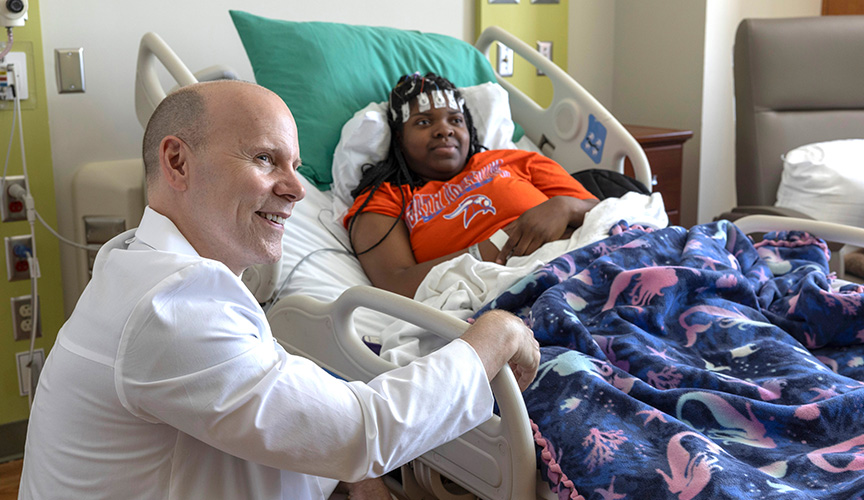
Fellows will work as part of a multidisciplinary team providing inpatient neuropsychological evaluations within the EMU of Le Bonheur’s National Association of Epilepsy Centers Level IV accredited program. Fellows will work closely in conjunction with the epilepsy team, which includes epileptologists, neurosurgeons and neuroimaging experts, by providing comprehensive epilepsy evaluations, pre- and post-surgical evaluations related to focal epilepsy and brain tumors, language mapping and pre- and post-surgical evaluations following responsive neurostimulation (RNS) placement. Patients are seen over multiple days, with interviews, testing and feedback conducted over the course of the week while the patient is undergoing video EEG monitoring. Fellows will participate and present patients in weekly EMU multidisciplinary conferences.
Inpatient Consultation Services:
In the second year of training, fellows will be trained in providing inpatient consultation services across different departments. These departments include cardiology, epilepsy and trauma. Services provided on this rotation includes pre-heart transplant evaluations, infant congenital heart disease neurodevelopmental evaluations, initial infantile spasms evaluations and traumatic brain injury (TBI) evaluations.
Medical Clinics:
Fellows will rotate in several multidisciplinary outpatient clinics, serving as the primary neuropsychology liaison to the team. These clinics include Pediatric Stroke Program, Neurogenetics Clinic, Concussion Clinic and Craniofacial Clinic. Options may be available in program development for building out other MDCs. Fellows will be able to choose which clinic they participate in based upon their interest and schedule availability.
Neuropsychology Match
We are in the process of applying for membership to the Association of Postdoctoral Programs in Clinical Neuropsychology (APPCN) Resident Match. For the upcoming fellowship year (2026–27), we will accept applications outside of APPCN. Therefore, applicants must obtain a provisional license from the Tennessee Board of Examiners in Psychology before beginning clinical work. The provisional license is valid for one year and may be extended upon request if additional time is needed to complete supervised hours. Fellows will be reimbursed for costs associated with obtaining their provisional license.
Applicants for the neuropsychology track should have completed doctoral training consistent with Houston Conference guidelines and demonstrate strong preparation in neuropsychology. Preferred qualifications include:
- Foundational Knowledge: Coursework in neuropsychology, neuroscience and brain-behavior relationships, plus supervised clinical training in pediatric neuropsychology.
- Assessment Expertise: Experience conducting comprehensive neuropsychological evaluations for children and adolescents with neurological, medical and developmental conditions (e.g., epilepsy, TBI, cancer, genetic disorders).
- Medical Complexity: Interest in working with medically involved populations and interpreting neuropsychological findings in the context of neuroimaging, neurology and treatment effects.
- Research and Scholarship: Engagement in research or scholarly activities relevant to neuropsychology, with an emphasis on evidence-based practice.
- Board Certification Preparation: Commitment to training that meets APPCN standards and prepares for ABPP/ABCN certification.
- Collaborative Practice: Ability to consult with multidisciplinary teams and provide tailored recommendations for educational and rehabilitation planning.
Training Goals and Objectives
Goal: Develop expertise in comprehensive neuropsychological evaluation of pediatric populations.
Objectives:
- Conduct developmentally informed assessments of cognitive, emotional, and behavioral functioning
- Select, administer, and interpret standardized tests across ages and ability levels
- Integrate data from multiple sources (e.g., interviews, records, observations)
Goal: Build advanced diagnostic reasoning and case formulation skills.
Objectives:
- Understand the impact of neurological, genetic, and environmental factors on development
- Formulate differential diagnoses in medically complex children, integrating multiple sources of information, and distinguishing different potential underlying causes for cognitive, behavioral, and emotional symptoms
- Develop meaningful case conceptualizations that guide intervention
Goal: Generate practical, evidence-based recommendations.
Objectives:
- Translate findings into clear, actionable recommendations for home, school, and clinical settings
- Develop a working knowledge of the special education system to provide practical, school-relevant guidance that can be effectively implemented.
- Provide psychoeducation to families and caregivers
- Understand intervention approaches (e.g., behavioral, educational, cognitive rehabilitation)
Goal: Communicate complex findings effectively to various audiences.
Objectives:
- Write clear, concise, and clinically useful neuropsychological reports
- Provide feedback to families in an understandable and sensitive manner
- Communicate with multidisciplinary teams (e.g., physicians, therapists, educators)
- Adapt communication for various backgrounds
Goal: Function effectively within interdisciplinary teams.
Objectives:
- Collaborate with professionals in different medical disciplines (e.g., neurology, cardiology, psychology, trauma, genetics, etc.)
- Understand roles of related disciplines (e.g., speech-language pathology, occupational therapy, physical therapy)
- Participate in case conferences and team-based care
Goal: Practice in accordance with professional and ethical standards.
Objectives:
- Incorporate ethics guidelines and best-practices positions from American Psychological Association and the American Academy of Clinical Neuropsychology into clinical practice
- Demonstrate professionalism, cultural competence, and reflective practice
- Understand legal issues relevant to pediatric practice (e.g., educational law, guardianship)
Goal: Provide responsive care.
Objectives:
- Incorporate an individual’s factors into assessment and interpretation
- Recognize potential biases in testing and diagnosis
- Demonstrate humility and responsiveness in all aspects of care.
- Adapt assessment approaches for various populations
Goal: Integrate research into clinical practice and contribute to the field.
Objectives:
- Critically evaluate scientific literature
- Participate in or complete a research project or program evaluation
- Apply evidence-based practices to clinical decision-making
- Present research findings (e.g., conferences, publications)
Goal: Develop competencies in supervision and education.
Objectives:
- Provide supervision to trainees (e.g., practicum students, interns)
- Deliver didactics or case presentations
- Develop skills in mentoring and professional development
Goal: Prepare for independent practice and board certification.
Objectives:
- Develop competencies aligned with American Board of Professional Psychology standards (e.g., in American Board of Clinical Neuropsychology)
- Build a professional identity and specialty focus
- Explore career pathways (academic, hospital-based, private practice)
- Maintain accurate, timely, and legally sound clinical documentation consistent with professional and regulatory standards.
- Identify scope of practice and limits of competence, and seek consultation or refer to other providers when appropriate.