The University of Tennessee (UT) Health Science Center and Le Bonheur Children’s Hospital will offer two postdoctoral fellowship positions beginning in September 2026, one in pediatric psychology and one in pediatric neuropsychology. These fellowships provide immersive clinical, research and didactic training within a collaborative pediatric medical setting. Fellows benefit from high-quality supervision, including opportunities to observe seasoned clinicians, co-treat and independently treat patients and receive real-time feedback during clinical encounters.
Across the training team, faculty bring more than 25 years of combined post-internship experience, offering a depth of expertise in pediatric behavioral health, neurodevelopmental assessment and integrated care. The program is designed to foster clinical competence, professional growth and readiness for independent practice and board certification.
Learn more about how to apply.
Advancing Expertise in Pediatric Psychology and Neuropsychology
Our fellowship program is designed to cultivate proficiency in evaluating and treating children with diverse medical conditions. Fellows engage with a broad patient demographic, spanning from infancy through young adulthood and are encouraged to explore their research interests throughout the program. This full-time fellowship equips participants with the clinical and research competencies essential for independent practice and academic careers in pediatric psychology and neuropsychology. This program fulfills the licensure requirements for postdoctoral supervised practice in the state of Tennessee. Fellows will also acquire the experience necessary to pursue board certification in their field.
Program Setting: About Le Bonheur Children’s

Pediatric psychology and neuropsychology at UT Health Science Center are located within Le Bonheur Children’s. Le Bonheur has a 290-bed, tertiary care children's hospital located in downtown Memphis, Tenn., and a 21-bed inpatient unit with West Tennessee Healthcare inside Jackson-Madison County General Hospital in Jackson, Tenn., with more than 700 medical staff representing 40 pediatric specialties. Le Bonheur also has Outpatient Centers in Jackson, Tenn., Tupelo, Miss., and Jonesboro, Ark.
- Accredited as a Level IV Epilepsy Center, the highest level by the National Association of Epilepsy Centers
- Only Level 1 Pediatric Trauma Center in the region as designated by the American College of Surgeons
- Region's only Level IV Neonatal Intensive Care Unit which provides the highest level of care to critically ill newborns
- Pediatric and fetal echocardiography programs accredited by the Intersocietal Accreditation Commission, a standard of excellence in the field
- Region's only hospital recognized as an ECMO Center of Excellence by the International Extracorporeal Life Support Organization (ELSO)
- Le Bonheur and St. Jude Children’s Research Hospital partner in the collaborative pediatric brain tumor program, one of the largest in the nation.
Our Team
Our faculty includes four pediatric psychologists and five neuropsychologists. Donald Bearden, PhD, division chief of Psychology and Behavioral Health at Le Bonheur is board certified through the American Board of Professional Psychology/Clinical Neuropsychology (ABPP/CN). Other faculty are in the process of pursuing board certification through the ABPP and ABPP/CN.
Our Values
Commitment to Respectful Practice
We are committed to cultivating a respectful, welcoming and supportive professional environment. We emphasize the importance of awareness and sensitivity in all interactions, whether among peers, supervisors and supervisees, patients and families or within academic and research settings. Our training approach encourages thoughtful engagement with various perspectives and backgrounds to enhance clinical care and collaboration.
Our community embraces the following principles:
- Culture of Appreciation: We strive to promote a culture of appreciation and respect for all people and foster an environment that provides the best care for patients, families and our community. We embrace the differences across all human experiences, equipping our trainees to do the same.
- Intentional Engagement: We prioritize thoughtful engagement and responsiveness to individual backgrounds and lived experiences across all aspects of our work and professional relationships. Fellows are encouraged to approach clinical care, supervision and collaboration with openness, respect and awareness of the contexts in which individuals live and develop.
- Self-Reflection: We encourage ongoing reflection on how personal identity and values are shaped by individual and cultural contexts.
- Interpersonal Understanding: We recognize the dynamic interaction between self and others, shaped by various backgrounds and experiences.
- Professional Integration: We apply foundational and functional competencies in psychology with a deep respect for individual and cultural contexts.
- Lifelong Learning: We are committed to learning about different cultures and worldviews and understanding how these shape individuals and communities.
- Mutual Respect: We honor and respect each other’s identities.
- Safe Exploration: We foster a safe and open environment for exploring similarities and differences, and how these influence our perceptions, experiences, values and interactions.
Faculty Research
Adrienne Arrindell, PhD
- Publication: Becker AE, Arrindell AH, et al. Social barriers to care for eating disorders. Int J Eat Disord. 2010.
Gwen Beard, PsyD
- Conference Presentation: Pediatric psychology case series – Le Bonheur Neuroscience Institute (2023).
- Recent activity includes participation in PACTS Summit (2025) poster sessions on pediatric behavioral health.
Donald J. Bearden, PhD, ABPP-CN, FAES
- Grant: A Delphi Consensus on Best Practices for Identifying and Treating Early Life Epilepsy – Pediatric Epilepsy Research Consortium (2025).
- Grant: From Assessment to Action: Optimizing Neuropsychological and Neurosurgical Communication in Epilepsy Surgical Planning – PERC (2025).
- Publication: O’Brien JA, Drake JA, Bearden DJ, et al. Cognitive considerations for adults with sickle cell disease completing the brief pain inventory. Pain Reports. 2025;10(1):e1189
Christen Holder, PhD
- Ijsselstijn H, Schiller RM, Holder C, Shappley RKH, Wray J, Hoskote A. Extracorporeal life support organization (ELSO) guidelines for follow-up after neonatal and pediatric extracorporeal membrane oxygenation. ASAIO Journal. 2021;67(9):955–963.
- Babajani-Feremi A, Holder CM, Narayana S, Fulton SP, Choudhri AF, et al. Predicting postoperative language outcome using presurgical fMRI, MEG, TMS, and high gamma ECoG. Clinical Neurophysiology. 2018;129(3):560–571.
- Batschelett M, Gibbs S, Holder CM, Holcombe B, Wheless JW, et al. Plasticity in the developing brain: neurophysiological basis for lesion-induced motor reorganization. Brain Communications. 2022;4(1):fcab300.
Nicole Kubinec, PhD
- Oswald-McCloskey KA, Kubinec N, Johnson E, Coffey A, Heinrich KP. Teacher Perspectives of Pediatric Neuropsychology and Supporting Children With Chronic Health Conditions. Archives of Clinical Neuropsychology. 2024;39(7):895–906.
- Conference Presentation: Poster on neurocognitive outcomes in medically complex children – INS Annual Meeting (2024).
- Grant: Co-investigator on Le Bonheur Neuroscience Institute neuropsychology outcomes study (2023).
Patricia Logan, PhD
- Publication: Logan P, et al. Executive functioning in children with congenital heart disease. J Pediatr Psychol. 2024.
Sarah Watts, PsyD
- Publication: Watts SE, Weems CF. Associations among selective attention, memory bias, cognitive errors and symptoms of anxiety in youth. J Abnorm Child Psychol.
- Recent activity includes faculty participation in PACTS Summit (2025) poster sessions on pediatric mental health.
Program Staff: Psychology and Neuropsychology Fellowship
Faculty

Dr. Adrienne Arrindell is a psychologist in the Department of Pediatrics at the University of Tennessee Health Science Center, where she works with children and adolescents in the Eating Disorder Program at LeBonheur Children's Hospital. Her current research focuses on behavioral and pharmacological interventions for children with eating and developmental concerns. She graduated from Princeton University (BA), the University of Virginia School of Law (JD), and Vanderbilt University (PhD), where her doctoral research focused on eating disorders and health psychology. She also has significant experience in assessment and intervention for developmental and behavioral concerns in youth.
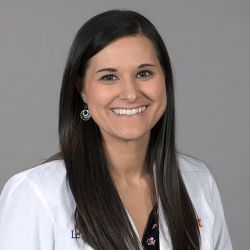
Gwen Beard, PsyD, is a clinical psychologist. She is assistant professor of pediatrics at the University of Tennessee Health Science Center.

Dr. Bearden is a pediatric psychologist and associate professor at the University of Tennessee Health Science Center and Le Bonheur Children's Hospital Neuroscience Institute. He is certified by the American Board of Professional Psychology and American Board of Neuropsychology. Dr. Bearden is Division Chief of Psychology and Behavioral Health at Le Bonheur and recipient of The Trish Ring Endowed Chair of Psychology. His clinical practice and research focus mostly on pediatric epilepsy and epilepsy surgery.

William Dalton, PhD, is an associate professor and pediatric psychologist at the University of Tennessee Health Science Center and Le Bonheur Children's Hospital. He is certified by the Tourette Association of America (TAA) Tourette Syndrome Behavior Therapy Institute (TS-BTI) in Comprehensive Behavioral Intervention for Tics (CBIT). Dalton provides evidence-based treatment for common neurological conditions and obesity through the Neuroscience Institute and Healthy Lifestyle Clinic at Le Bonheur.
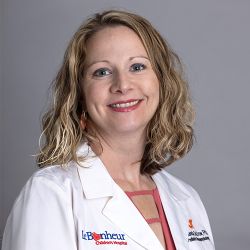
Amanda DeCrow, PhD, is a pediatric neuropsychologist and associate professor at the University of Tennessee Health Science Center and Le Bonheur Children's Hospital Neuroscience Institute. She is certified by the American Board of Professional Psychology and American Board of Neuropsychology.

Christen Holder, PhD, is the clinical director of Pediatric Neuropsychology and specializes in epilepsy, congenital heart disease and high-risk newborn populations. She serves as co-director of the Movement Disorders and Tourette Syndrome Center.
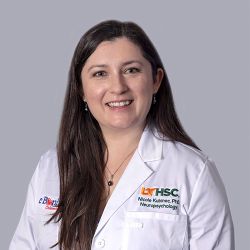
Nicole Kubinec, PhD is a pediatric neuropsychologist. She completed her residency in Clinical and Research Neuropsychology at the University of Michigan. Kubinec completed her internship in Pediatric Neuropsychology at Minnesota Medical School.

Dr. Logan, an Associate Professor of Pediatrics, joined the University of Tennessee Health Science Center in July 2024. Dr. Logan received her B.A., M.S., and PhD at Mississippi State University. She completed an APA accredited internship in Pediatric Psychology at the University of Nebraska Medical Center.
Dr. Logan has held several research and faculty positions since completing her training, including an appointment at the University of Mississippi Medical Center and Cincinnati Children’s Hospital Medical Center in the Division of Behavioral Medicine and Clinical Psychology. Previous experience includes a faculty position at the University of Alabama (Tuscaloosa), a research fellowship at the University of Georgia, and serving on the Executive Board of the Georgia Association of School Psychologists.
Dr. Logan has expertise working with a wide spectrum of patients, including children and adolescents with congenital cardiac defects and comorbid social and emotional regulation difficulties. In addition to being a currently licensed psychologist in Tennessee and Georgia, Dr. Logan is recognized as a Health Service Psychologist by the National Register.

Sarah Watts, PsyD, is a pediatric neuropsychologist and an Assistant Professor at the University of Tennessee Health Science Center. She is a member of the National Academy of Neuropsychology.